
Hello, today we will be looking into how to potty train a Siberian husky puppy. It’s no secret that one of the biggest gripes of new owners is getting your new husky puppy to go potty on your designated space, so we will be focusing on covering all of the information on toilet training husky pups!
From base guidelines to follow with a new pup to what to do in case that you can’t potty train a husky. By the end I’m sure that you will be equipped to deal with anything that your new Siberian friend challenges you with.
How To Potty Train A Husky
Why won’t my husky go where I want it to go?
Usually this is the questions that most new owners have. There are many reasons why a puppy might not understand where he needs to go, the main reason being that it’s very likely that the pup hasn’t been properly trained and housebroken.
This usually happens to different types of dogs, for example, when you’ve just adopted a pup from someone, it’s very likely that the puppy hasn’t had time to adjust to its surroundings, in turn the puppy will have the urge to go but won’t know where to relieve himself. This can also happen to dogs that are accustomed to go outside, so if the previous owners made them go outside or kept them outside, the puppy won’t know that he isn’t allowed to go inside, since he’s always gone wherever he wants to.
Another important factor is to always keep in mind that in order to get the dogs to go somewhere specific, they need to make the connections between your actions and the fact that they are pooping.
For example: if a puppy is left alone inside all day, where he has free reign on where to go, then the owners come home and see that the puppy has soiled everywhere, they will get angry and yell at the dog, however by that point the dog already went and he can’t make the connection between the yelling and the pooping.
This results in a puppy that doesn’t understand the consequences of his actions. This is a very dangerous thing, as the dog might realize his being corrected for pooping, but he doesn’t know where to go still, so instead of understanding that he can’t go inside, he might start to hide the fact that he’s going, since he thinks that the popping itself is bad, and start leaving little secrets around the house)).
Similarly another thing that happens constantly is that new owners buy puppy pads, but expect the pad to do the work for them, and while huskies are very smart dogs, they don’t understand that they are supposed to go on the pad just because it’s a pad. We will be talking about how to potty train a husky puppy with a puppy pad later on the article, but for now, please remember that they don’t work on their own.
Puppy pads can be a real asset if used properly, but again, dogs need to make the connection between their actions and consequences, so we need to be there for the puppy when it’s going in order to assure that you can move him to the pad while he’s going, that way the dog will understand that he needs to go on the pad. You also need to give a lot of praise to your young husky, whenever he goes in the pad give him a big pat and let him know verbally that he did a good job.
So we already know what not to do and the main causes as to why your pup might not be going where he needs to. Lets now talk about what you need to do in order to get your puppy trained and ready to be inside without ruining your furniture and floors!
How to train your husky
Ok, so here we are at the meat of the article, for all of the people that think that they can’t potty train a husky, you will be proven wrong. Today we will be learning a lot about training puppies, but first let’s take care of a couple of misconceptions that you might have about training your dog.
The first thing that I want to put to rest is the fact that people think that you can’t teach an old dog where to go, sometimes people even seem to think that you can’t teach a puppy that might have lived a while in a different house, but this is not the case.
The fact of the matter is that huskies are very smart dogs and with some patience any dog can be trained, so rest assured that your husky pup most likely won’t be any different.
The second thing that I would like to dispel is the fact that training a puppy can be very time consuming. People always want to know exactly how long does it take to house train a husky puppy, but the real answer is that this can vary depending on a couple of factors, however you can be calm, husky dogs have it in their nature to be obedient and they are very smart dogs, so it’s usually a very painless process. Let’s add to that the fact that you’re reading this article and you will have a perfectly obedient house dog in no time!
Now that we’ve taken care of those misconceptions, let’s go ahead and take a look at the steps that you need to take in order to train your puppy:
1. Get to know your Husky:
It’s a very common occurrence for puppies to want to go either peeing or pooping, just like babies, pups tend to have to go way more often than an adult dog, so it’ very important that you start to take notice of when your puppy goes to the bathroom. Most of the times he will want to go after eating, usually 15 to 30 minutes, or whenever he just had a vigorous exercise, as you know exercising can loosen the intestines, so just observe him and you will start to notice a pattern. After you have this pattern down, you have to be ready at all times.
This is where the puppy pads come in if you’re using them. Whenever you have an inkling that your dog is about to go, pick him up right before the act and either take him outside or move him to the designated area you’ve created inside. That way he will start to recognize where he needs to go.
This step is extremely important, if you don’t pay attention to your puppy and he goes inside the house, you will have a very hard time getting him to stop doing it, again, it’s not impossible to stop him, but you will have a harder time.
2. Create a regular routine:
Most dogs have a routine, whether you imposed it or not, it’s very likely that you dog instinctively follows a pattern. This is somethings that almost all dogs do on their own, so it’s a very good idea to use this in our favor. As you know, it can be difficult to spend all day with a puppy, and they require a lot of attention. So if you create a schedule that follows yours, it will be way easier to get a dog to go where he needs.
Let’s say that you usually get up at 7am, go for a run, have a shower and then breakfast, after that you go to work and get back by 5pm, you can use that same time blocks for your puppy's needs. You can get up and take your pup outside, it’s not recommended for puppies to go for runs when they are younger than 8 months, but after that you can even take them with you, it’s very likely that he will need to go then.
When you get back you can then have breakfast with your pup and keep an eye out for him to go to the bathroom. You can repeat this at night when you have dinner and before you know it your pup will be following your routine and your dog will be successfully house trained!
3. Give him his own space:
Ok, so here’s where a lot of people have issues when it comes to potty training a Siberian husky. You need to be consistent with the place where you are taking them to go. Whether it is inside with a puppy pad or your front yard, you need to keep coming back to that same place every time if you can, sometimes when you’re out for a walk this might not be possible but try and be as consistent as possible with this one.
This is because dogs need to associate things, if they literally only go one place then they will understand that that one place is where they are supposed to do their business and in turn they will want to go there. This one is especially important if you’re training your dog with puppy pads.
I will take this opportunity to address the puppy pads you need to first of all pick the spot in your house where the dog is supposed to use as a bathroom, you need to chose wisely since you will be pretty much taking the dog there constantly, don’t choose a place where the dog can’t get on its own, because he won’t be able to go without your help later.
After you have your place, put the puppy pad down and you can pretty much do everything that this guide says, but instead of taking him outside you will be taking the pup to the puppy pad.
All in all the most important thing is that you need to positively reinforce the dog, so every time that you take him to his spot and the puppy manages to do his business, give him a big pat and maybe even a belly rub. The puppy will start to then understand that he did something correctly and will want to continue doing it every time, since he wants to get a belly rub. Treats or any other form of reward will work as well.
4. Know your puppy:
All dogs are different, each and every single one of them will have different preferences, so get to know your dog and get really acquainted with his mannerisms and telltales, this will first create a great understanding and will deepen the bond between you and your puppy, but it will also help you when you are determining whether your puppy needs to go or not!
Some dogs will get up first thing in the morning and want to go, others will wait for a while and some might not even show any signs that they want to go but with a little patience you will start to recognize the patterns and behaviors of your dog. This will allow you to take him out at the right time so that you can get him trained quicker.
5. Limit the space:
Huskies love to explore, if you give them free reign to go and explore they will run all over the place and while this might be good and fun for him, you won’t be having so much fun picking up after him all over the house. So whether it’s inside or outside, be sure to delimit his space, that way the dog will get familiar with the surroundings and he will learn quicker where he can and cannot go.
It’s also important to point out that, for the most part, dogs won’t go where they sleep, so if you give your dog a space where he lives and he gets familiar with it, it will be harder for him to go all over the place and will naturally adapt to the spot that you’ve designed as the go spot.
It’s also very important to keep the space clean, if your dog goes inside in a place where he’s not supposed to go, you need to go ahead and clean and scrub the place clean as soon as possible, since dogs are more likely to do it again if they smell their scent. So give them a space, show them the limits of said space and keep it clean!
6. What to do when sleeping:
Now this next part is where a lot of people struggle, If you’re asleep and the dog is not, he basically can do whatever he wants, right? Well, that might be true, but if you’ve been following this guide you’ve already given your puppy both a limited space to live, a schedule and a designated space where he can go potty. You can do the same thing that you’ve done so far, but you will need to stay awake a little longer for this step, remember that your schedule is the dog’s schedule, so if you’ve done everything correctly so far, your puppy should be ready for bed at around this time.
Usually the recommended steps in this case is to stay awake until midnight, or as close to as possible, and take him out to his potty spot, after he goes and you give him his positive reinforcement, you can go to bed. At this time it’s recommended that you sleep with the dog relatively close or in the same room as you, this is so that you can hear if he wants to go to the bathroom, most huskies will alert you, if not that’s ok, just keep an eye out and take him to his spot if he wakes you up. If the dog already has a feeding and bowel movement schedule, plus a designated spot, it’s very likely that you will have a pretty uneventful night.
7. Crate Training Your Husky
Ok, so another great alternative when it comes to potty training your husky is crates. A lot of people prefer this method, because of its convenience and I recommend it for people that are going to keep their dog inside.
What you need to do in this case is simply get your crate where your dog will stay and have your pup get familiar with the crate. Throw some treats inside, give him a lot of positive reinforcement when he goes in and never ever yell or correct him when he’s inside the crate, that way he will create a positive image of going in, and you won’t have to force him in or make him suffer for it.
Alternatively you can feed him inside as well, as another form of reinforcement. This will all work towards creating a good environment for your puppy. Now that you’ve done all of this, you’ve basically created a room for your puppy and as we’ve mentioned before, dogs usually don’t go potty where they sleep. You will have to make it their crate and have them sleep there, and they will ask to go outside for potty!
8. When accidents occur:
Ok, so we’ve prepared for everything up to this point, you already have your spot, your schedule, you’ve been reinforcing positively and that’s good. Still, it’s very possible for an accident to occur.
Puppies can have a hard time with bladder control, so it’s possible that your dogs starts to go without showing any signs, especially if it’s number one.
Worry not, the first thing that you need to do if this happens is to try and move the dog to it’s spot as quickly as possible. This is so that he can understand that the action that he is doing at that moment is not ok to do inside
There is no need to yell or hit the dog, puppies can become scared of you pretty easily and at that point they won’t be able to follow any routines or hold their bladder for that matter, so just calmly move him while saying “No” or a similar command. When the dog is done, you need to go inside and clean up right away, this is so that the smell doesn’t set in, that way your puppy is way less likely to repeat what he’s done inside. Avoid using any strong chemicals like bleach or ammonia since it can hurt the dog, however there are special odor and scent remover for dogs that you can use safely and will take care of the smell for you.
Bell Training
Another very useful tip that we have for you today is to use bells, in order to get your puppies to tell you when they need to go outside. All you need to do for this is hang a bell on your door and every time you are taking him outside ring the bell, and if possible play with the bell so that your pup will ring it as well, after that let him outside, this will create a reinforcement that will make him associate the bell with going outside, and with this you’ve basically created a doorbell for your husky pup!
If you do this 7 things, you can rest assured that your puppy will be going where you want him to go in no time, the hardest part about potty training your dog is honestly being consistent, you might start to get discouraged if it’s taking a little more time than usual, but rest assured that if you do everything that’s been stated in this guide, sooner or later you will have a trained puppy.
Husky Potty Training Video
Older dogs
It’s worth noting that everything that has been written for puppies is applicable to older dogs. Usually older dogs have a bad reputation of being untrainable, thanks to the whole “Old dog can’t learn new tricks” phrase, however this is not true, it will take longer, as habits are hard to break, but if you stick to this guide you can be sure that your older dog can be potty trained as well. It’s very important to remember to delimit the space of an older dog, you can’t give free rein of the house to an older dog that is not potty trained since you pretty much are giving him a big toilet for him to explore.
Remember to always clean up any places that he’s been to where he’s not supposed to, as older dogs might have a harder time understanding that they can’t go somewhere just because it smells like them.
Finally, use a lot of positive reinforcement as well with tasty treats and rubs, old dogs can sometimes be less receptive to orders but if you know how to get their attention you will pretty much be able to train them to do anything at any point in their life. Adopting an older dog is a very worthwhile thing to do and while it can be more difficult it can also be ten times more rewarding, just remember to be patient!
Conclusion
So there you have it folks, a comprehensive guide on how to potty train a husky puppy. It might take awhile, but huskies are very intelligent animals, so in the end all that you need is patience and persistence, and of course a lot of love and positive reinforcement. At the end of the day this is just a period in your dog’s life and while it might seem like a chore at the time, it’s a very good bonding experience for you and your dog alike!
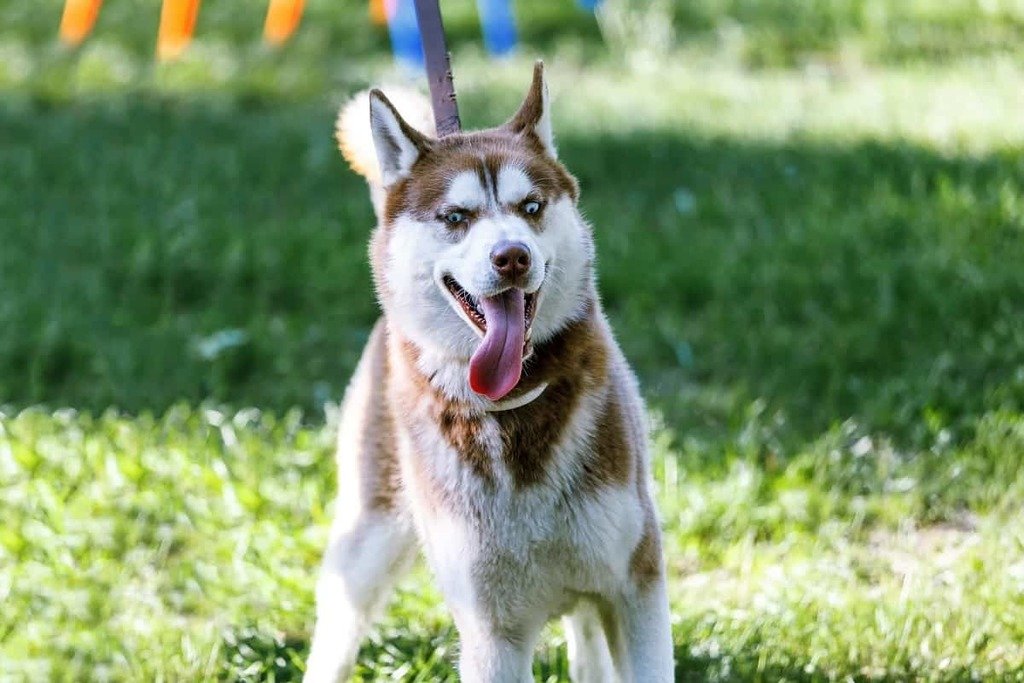
Husky Leash Training
The world is an exciting place! Especially when you’ve got the keen sense of smell and energy of a Siberian Husky. A walk around the block for a husky can be like a visit to Disneyland for a child – there is so much to explore and not enough time. Huskies pull because it gets them where they want to go, faster.
Huskies can be one of the more difficult breeds of dog to leash train purely because they were originally bred to pull loads. Pulling on their leash is just normal to them.
Other breeds might stop pulling simply because it’s frustrating, but to huskies, it’s not frustrating, it’s just life. That doesn’t make it less frustrating for you, the owner, though! Teaching your husky to stop pulling on the leash is one of the most important tasks of raising a well-behaved dog.
How to Teach Your Husky to Stop Pulling
 So we know that yanking the collar or leash won’t help to teach your husky to stop pulling because they expect to drag heavy loads (which is what your yanking comes across as), and they’ll still get to their desired destination eventually. This is the key to dismantling this behavior: don’t let them get to where they want to go.
The easiest way to achieve this is to stop completely still when your dog is pulling. Don’t move at all until the leash goes slack. The dog will learn that he will only be able to move anywhere when the leash is slack.
Sometimes this can be difficult for very excited dogs or dogs with lots of energy, which is where the second tactic comes in…
When the dog pulls, turn at 180 degrees, i.e. go back in the opposite direction. This way your energetic dog still gets to be moving, but will soon learn that pulling on the leash only results in not going where he wants to go.
If the dog walks with a slack leash in that opposite direction you can reward his good behavior by turning back to the original direction, but if he pulls again you have to turn yet again. The dog can never be rewarded for pulling by getting where he wants to go.
Tips for Most Effective Results
Your dog is never a lost cause – you can teach your older husky not to pull on the leash. It is, however, far easier to teach good habits early on in the dog’s life than correcting bad behavior later.
Consistency is critical when leash training your husky. Everyone in your household must use the same commands and the same set of rules, or it will serve to confuse the dog, ultimately taking longer to train the dog properly.
Correction collars should only be used as a last resort and with a qualified trainer. There is potential for correction collars or choker chains to backfire with huskies, causing behavioral problems such as aggression.
Begin training your husky in an area with no distractions, preferably the backyard. Then move on to quiet areas of the neighborhood or off-peak times for other walkers and dogs. Your husky needs to be able to concentrate and get the basics down pat before you take on the big wide world!
Do you need more help? Check out Harness and Leash Training for Siberian Husky Puppies.
Harness, Leash, Or None At All?!
There are options when it comes to leashes or harnesses for any dog, and, like with any dog, choosing the right one for your husky depends on the individual circumstance.
When it comes to training husky not to pull on the leash, some people suggest that a leash is better because it gives strong physical feedback. If you don’t like the idea of your dog mildly choking, however, this isn’t the school of thought for you! Harnesses have been created for exactly this reason – they allow dogs to be walked without extra pressure on their necks or tracheas.
 Ultimately, the best option for training a husky (or any breed, for that matter) not to pull is to opt for a harness. Not all harnesses are made equally, however. A regular walking harness has the attachment for the leash at the back, between the shoulders.
Whilst it does have the benefit over a traditional flat collar and leash, it doesn’t discourage pulling. To discourage pulling, you want to find a harness that has the attachment point at the front. That’s why they’re sometimes called Anti-Pull Harnesses.
The joy of the front-attachment harness is that because of the site of the attachment, the dog gets pulled around toward the person walking him if he lunges or pulls. His direction is changed, he doesn’t get to where he needs to go, and ultimately achieving the goal of teaching your dog not to pull. The harness takes care of the hard work for you!
Siberian Huskies let off leash?
And then there’s the big question: can you let the husky of the leash? In a nutshell – no. Not outside your own home. Huskies are a breed that is built for endurance and can hunt their prey for hours. If you’re in public and your husky takes interest in a squirrel, you may have a very hard time getting them back.
If you get to the point where your husky is impeccably trained and you know you have total control to get them to obey you in an instant, perhaps then you could consider it. But if you’re only just starting to teach your husky not to pull, you’ve got a long way until you can abandon the leash all together.
Here you can find more about Siberian Huskies Off Leash.
Conclusion and Training Resources
Huskies are an energetic breed that needs daily exercise, teaching them to stop pulling on the lead from an early age is going to make your life as a dog owner easier and more enjoyable.
They’re one of the harder breeds to teach to walk with a slack leash, but it is possible! Start from an early age, in a quiet place, with a front-attaching harness, and remember: don’t let him get to where he wants to go. Your husky will probably never be able to go off the lead in a public place, so getting him to walk with a slack leash is essential!
Still need more help getting your dog to behave on the leash? Have a look at ASPCA article on holding a leash for more training tips.
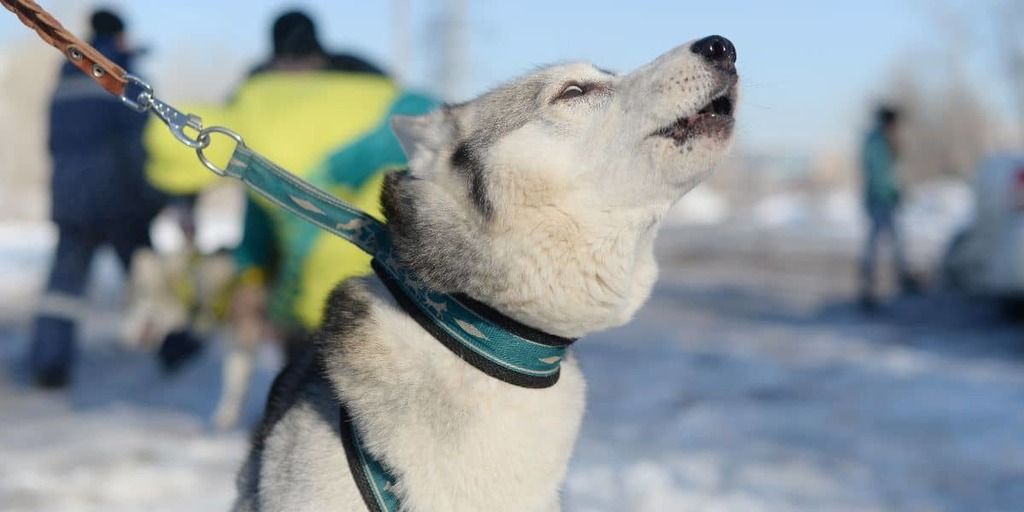
Husky Puppy Howling & Barking
Having trouble keeping a lid on your noisy Husky? Your puppy won’t stop crying? Here are our top tips for controlling the situation and giving you (and your neighbors) some peace.
Try to Figure Out the Cause
When your dog barks, howls, cries, or whimpers he or she is trying to communicate. Your first job should be to try and figure out the cause so that you know what to fix.
 Although unlikely, your Husky might be injured or have a medical issue and crying out for help. That’s likely to result in whimpering at all times (not just at night) and whether you are around or not. If that’s the case you should, of course, get things checked out as soon as possible.
If, on the other hand, your Husky barks when you or other people are around, could this be a sign that they want something? Probably attention.
Huskies are social dogs that settle better in packs. Left on their own they might get bored and exhibit destructive behaviors. This includes being left alone at night, so you might want to think about bringing the dog inside and closer to others (see Crate Training below).
Another possibility is that something has your Husky’s attention. A squirrel or possum running across the fence? A neighbor’s cat? If your Husky barks and continues to do so when you are present, see if he/she is pointing you to what they are barking at.
Issue a “Quiet” command
Just as you teach your dog other commands, a “quiet” command might work. This would be part of the regular training of your puppy (which I talked about right here) and require lots of feedback and patience.
You want to issue the command and wait for your dog to quieten down before a reward such as a small treat, praise, and pats. Regardless of the other methods on this page teaching your puppy a command to quieten down can not possibly be a bad thing, even if it doesn’t solve the problem this time.
More Exercise
To try and tackle boredom, especially if you aren’t around during the day, you should consider giving your Siberian Husky more exercise. Exercise and training start at an early age and are required for the life of a Husky. Go for brisk walks or runs morning and night and see if this changes the barking behavior. If the barking subsides, then you have found the cause and can do something about it.
Introduce a Companion
It might not always be possible but if you believe your Husky does suffer from separation anxiety, another canine companion (particularly another Husky) might be the answer. Huskies tend to get along and keep each other entertained.
You can contact your local Husky rescue organization and see if any animals need a temporary home. This will let you test the theory before taking on board another pet full time. Just make sure they are all spayed and neutered if you are mixing the genders! There is a list of Husky Rescue Organizations, we collected, as well as some tips on how to adopt a husky.
Best Howl & Bark Control Products For Huskies
As mentioned above there are several ways to stop husky puppy howling and barking.
The first approach should always be using training methods and for that, we recommend taking the time to learn more about barking in general so you can have an idea as to why a Siberian husky is barking or howling. To do this in the chart below we recommend a book titled “Barking: The Sound of a Language (Dogwise Training Manual)” which specifically focuses on barking. This book will give you a much deeper understanding of how your Siberian Husky communicates and will help guide you in the direction needed to manage the issue.
Secondly, you could try a device that uses an ultrasonic bark deterrent to keep your dog’s howl under control.
And finally, the third method which is closest to a shock collar is using a vibrating collar. A vibrating collar is a bit more humane than using an electric shock that your puppy won’t enjoy much.
Crate training
This is one of the most effective strategies at reducing howling and barking in any dog, not just Huskies. You can place a crate (a box to enclose an animal) inside your home closer to you, but still, keep your Husky contained so he doesn’t run amuck around the house.
Go for a large metal framed crate, even if it seems too big for your puppy because you will want to keep using this throughout the life of your Husky. Ensure the dog can get up, spin around, and lay down again. A blanket can help soften the environment and add warmth. A water bottle attached to the side is handy.
Please remember that the crate is not punishment. It is not a jail! It is a device, when combined with positive feedback, can help improve the behavior of your dog.
We highly recommend checking out this YouTube video to see how it can be done.
Other ideas
Still, struggling to control your Husky’s howling and barking?
- You could try your local dog club, whether Huskies or a general one, and see what other people have tried.
- You can add another toy such as a KONG
 to keep your puppy busy.
- Finally, you could try a training collar for your dog. My preference, if you choose to go this route, would be this Dog Training Collar – Rechargeable. It has a beeping and vibration setting, but also an electric shock, which I don’t recommend using in any case. But mostly, the beeping is enough to warn your husky and if she keeps on, you can use the vibration. I tried it personally and I have never gone further than the vibration setting.
Conclusion
If your Siberian husky puppy’s howling and barking are terrorizing your family and neighbors, don’t despair!
– First, check that your dog is healthy and not suffering from injury or illness. Work on teaching your dog to respond to a “quiet” command.
– Try more exercise or another companion and see if that helps.
– Crate training is also a great method for curbing antisocial behavior in dogs. You can also try devices such as the ultrasonic method, or vibrating collar.
There are lots of options out there and although it might take time and patience, you will be rewarded with persistence in training and feedback.

Siberian Huskies are intelligent dogs, but can also be stubborn, and grow bored easily. Training a Husky puppy is not easy. You will need a lot of patience and dedication to properly train a Siberian Husky. Are you up for the challenge?
How difficult is it to train a Husky?
 If you are new to the breed then you need to assess yourself first. Sure, Huskies look all cute and pretty, but are you prepared to train and exercise your dog every single day?
Siberian Huskies are difficult to train. Rewarding in the long run, but difficult. If you haven’t owned a dog before then you might want to consider adopting an older, trained, and socialized Husky or consider a different breed.
Before acquiring your first Husky you might also want to get in touch with your local Siberian Husky club where you can meet owners, play with the animals, and get a feeling for whether this is the breed that is right for you in your current lifestyle.
Top Training Tips for Your Husky
1. Be the leader of the pack
As any Husky training guide will suggest, you need to be the leader of the pack. Be the “alpha dog”, so to speak. That does not mean you will be aggressive, loud, or violent. It does mean you need to exert dominance over your dog. Huskies will not obey if they view their owner as passive or weak.
Being the leader means firm commands, with consistent wording, and applied consistently. No bending the rules, ever! If one rule can be bent then your dog will think all rules can be bent!
For example, when passing through a gate or doorway, you lead and the puppy follows. When playtime is up, you remove the toys from the puppy’s possession. You decide when and where the puppy sleeps. Crate training is also likely to be an appropriate activity. In short: you lead, and your Husky should follow.
2. Start early
As soon as you bring the puppy home you want to settle into a routine. Each day you and your puppy will need to sleep, eat, poop, play, and exercise. The great thing about routine is that it helps build trust with your puppy, plus helps you remember to get through all the activities that need to happen each day.
Training is not something that necessarily stops at a certain age. As your puppy grows up certain behaviors and routines will become second nature, only to be replaced with more advanced training and exercise. Thankfully some training such as housebreaking your Husky puppy will settle down and not require constant attention.
3. Give Feedback (immediate, clear, and consistent)
You will be well equipped to take on the challenges of raising a Siberian Husky puppy if you are armed with these three feedback concepts:
Immediacy
Feedback needs to be given as soon as the dog exhibits a behavior worthy of it, whether that be good behavior (demanding positive feedback) or bad behavior (demanding negative feedback). By ‘soon’, we mean within 5 seconds – straight away!
Why so soon? Because you want the puppy to connect its own behavior to your response. The puppy is constantly exhibiting different behaviors: playing with this, wandering over there, lying down, getting up, and on it goes all day long.
Siberian Huskies can get bored easily. If you wait just a few moments too long your puppy is probably already doing something else! Your response will either encourage the puppy to repeat the behavior or discourage it.

Clarity
The words you say and the actions you take when issuing feedback should not leave any doubt as to the purpose; positive or negative. How you verbalize positive feedback (“Good boy”, “Good Girl”) should be distinctly different in sound to how you verbalize negative feedback (“Bad Dog”, “No”). Some trainers recommend using special words and avoid “Yes” and “No”, which are commonly said in everyday conversation.
For example, your Husky is likely to only hear “Good Boy” in the context of its own behavior unless you also have a young child and using Good Boy to him as well! In which case an alternative phrase should be picked for the dog such as “Atta Boy”, “Yup-Yup”, or whatever you choose. Pick something and go with it for the life of the dog!
“No” comes up often in everyday human speech that it would be wise to pick an alternative. Shibashake recommends “Ack-Ack” instead. By saying “Ack-Ack” instead of “No” your dog will associate that command exclusively with its own behavior and adjust accordingly.
Consistency
Siberians are smart dogs, but you still want to be consistent to remove any doubt as to the type or purpose of feedback. By using the same words each time your Husky will associate them with good or bad behavior.
Just as important is to give the same feedback every single time. If your puppy likes chewing on your shoes, then never once let him or her get away with it! Repeat the same negative feedback words every single time. Don’t leave any doubt in the puppy’s mind that the behavior will be tolerated!
Similarly, if your puppy does good by sitting still while you plate up the food bowl, you can and should give positive, reinforcing feedback each time. Even if the puppy seems to have mastered self-control at feeding time, there is no reason to stop loving your dog for behaving!
If you are using more than words for feedback, and you probably are, such as scratching behind the ears or giving the puppy a cuddle, make sure that is consistent as well. You don’t want to cuddle the puppy for positive feedback on one occasion, but then on another after negative feedback also cuddles because you feel sorry for the puppy. Consistency is the key.
4. Don’t give up!
Training is going to take time. Not just a few days here or there, but consistent training, every day, for many months. Don’t give up! If something isn’t working over a period, try something else. Ask other Siberian Husky owners at your local club what has worked for them. Check out our other tips on training Husky puppies for advice on specific issues.
Training a Siberian Husky puppy requires effort, dedication, and persistence, but please don’t let that put you off! Training can be fun, enlightening, and rewarding for puppy and trainer alike. Improved relationships between your pet and yourself, your family, the general public and other animals is the secret to successful pet ownership!
Conclusion
Husky puppies can be a handful at times but with patience and dedication, you will get there and very much enhance the bond between owner and pet
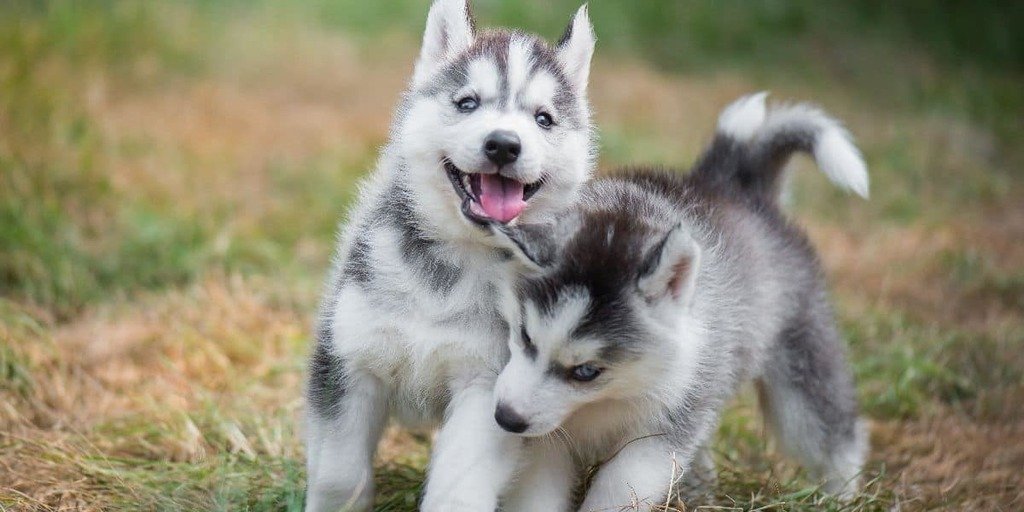
Have a Siberian Husky puppy and looking for games to keep it entertained and occupied? Here are 5 playtime ideas you can try…
1. Fetch and Drop-It
Everyone knows to fetch, and the chances are your Husky puppy will pick it up very quickly. Find a small, durable, rubber toy that can fit in your puppy’s mouth, but is not so small that he or she might be tempted to eat it. Balls are great because they bounce along the ground and help train your puppy to predict moving objects.
Just as important as retrieving the toy is dropping it on command. Use a simple command such as ‘drop’ and be sure to use feedback and treats to encourage this behavior. The drop command might come in handy later if your puppy likes to steal other things around the house, such as your shoes and socks!

 We found KONG Squeaker Tennis Balls to be a great toy for playing fetch and drop with your husky. We tested different sizes and the medium one seems to fit perfectly since your husky still would be able to chew it, which is what they like to do as well.
2. Freeze
If your puppy likes to get excited and boisterous (and Huskies are likely to) then try this game of bringing things to a halt. When the excitement is high and your puppy is bouncing around, call ‘freeze!’ and stop.
Totally freeze up: in movement and facial expression. Sure your puppy won’t understand this at first, but when your puppy does quieten down, give some positive feedback and a treat to acknowledge he or she is doing the right thing.
Like ‘drop’, the ‘freeze’ command will be handy later on when your puppy gets out and about. Being able to bring an over-excited Husky to calmness in public areas, or when guests are present, is an essential skill.
3. Find the Toy
If your puppy has a few toys there is a good chance it prefers to play with one in particular. So give this toy a nickname to identify it – the name doesn’t matter so just pick a characteristic that is easy to remember. For example, if the toy is a rubber chicken, you might call it ‘chookie’.
Now, use this name whenever your puppy picks up that toy. Over time your puppy will learn the association with your nickname and that toy, which you can use during fetch. Furthermore, you can hide this toy around the house or yard and ask your puppy to ‘find chookie’. Once this toy is “learned” move on to other toys or objects. Dogs have a remarkable ability to learn words and Siberian Huskies are no exception.
4. Treat Toys
A chew toy such as a Kong or Nylabone is going to keep your puppy engaged for long periods of time, and the toy itself should last months or years of heavy chewing abuse. Our favorite is a Kong toy (you can check the price on Amazon here)
Typically, stuff a Kong toy with dry dog food in with peanut butter and leave it to your Husky to get the treat out. For an added challenge, we freeze it for 4-6 hours before giving our huskies to play.
We like to stuff it with any treats, peanut butter, cheese whiz, a mixture of kibble and yogurt works for us as best, or literally with nothing at all – it doesn’t matter, your husky will go crazy for this toy, particularly if they’re a chewer or chaser!
This is a great toy to leave a dog that is left alone in the yard. A Husky’s temperament is inquisitive and, if left to become bored, may become destructive.
So a toy such as this is a good distraction if you are out or unable to keep an eye on the dog. It also can prevent so many behavioral issues, like destructive chewing or excessive vocalization from boredom or anxiety.


5. Soccer
Find a ball that is too large to fit in your Husky’s mouth, and reasonably soft or bouncy, and simply play soccer with him or her. At first, your puppy might try to grab the toy in its jaws – but after he figures this can’t be done he will start pushing it around. A good alternative to fetch if you don’t want puppy slobber all over your hands!


Whatever game you play just be aware that a puppy can tire out quickly, so limit physical exercise to 10 minutes at a time before rest. As your Siberian Husky puppy grows, you can extend this playtime, plus of course mix it up with walking or jogging your dog for exercise.
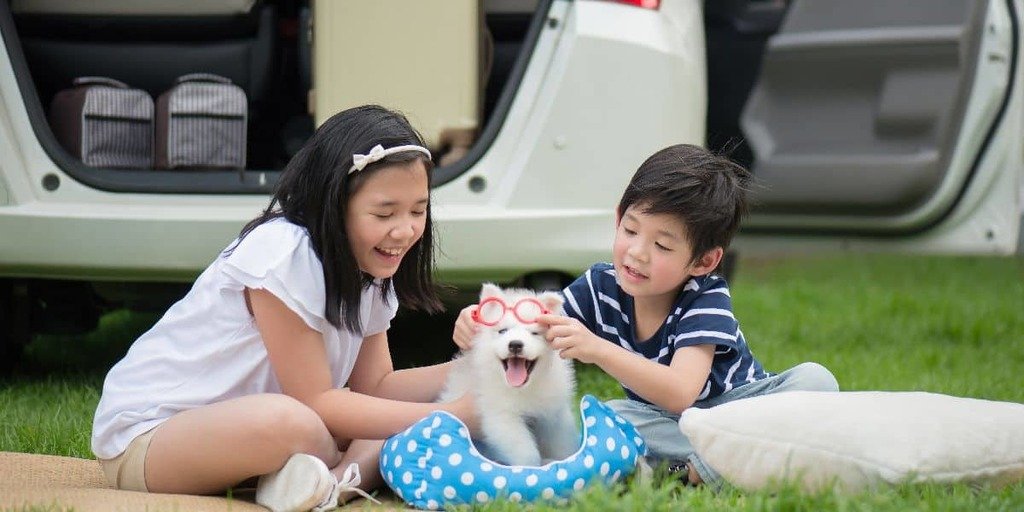
The Siberian Husky is a great family dog – not too large, active, and will put up with some rough play from children. A Husky’s natural behavior is to play, run, and be part of the “pack” – which will be your family.
The stories about the Eskimos who bred the Husky are the best evidence of how this breed relates to children. The birth of a child for these northern people is a big event, but a baby’s life is associated with various difficulties due to severe northern conditions.
Eskimos use their beloved dogs as nannies and a source of heat. They get the entire flock into their home and put the child between the dogs. And so the little Eskimo grows up surrounded by warm and friendly husky dogs.
Of course, for modern people living in warm and comfortable apartments, such excessive trust in dogs may seem strange, but this story clearly proves that children and huskies get along well with each other.
How to introduce a husky to a newborn baby?
If introducing a new baby to a home that already has a Husky, you want to be aware of potential jealousy issues. The Husky might have already been the “baby” of the house and could soon find itself having substantially less attention paid to him or her.
Weeks before the baby arrives you probably want to think about moving the Husky outdoors and away from constant attention. This will help the Husky get used to being alone a bit more, plus free up the house for all the “baby stuff” that is going to happen soon, including new furniture, playtime, visitors, sights, and smells. Gradually you can introduce the Husky to the new family member and make acquaintances.
Things to consider before introducing a Husky (whether puppy or adult) into your home, or before you bring a baby into a home that already has a Husky:

1. Supervision
You no doubt already know that children need to be supervised around dogs. This means watching them at all times, not just a glance every other minute.
In most cases, children up to 10-13 years old can not independently coordinate their actions in relation to the husky. Their behavior is often the opposite of what the dog considers polite.
Children are mobile, emotional and do not always understand what a pet may not like. Frankly speaking, the younger the child the more attention you need to pay. Kids and puppies are not aware of their size and strength and can hurt each other.
Young kids might think pulling the tail of the dog is funny, but the dog might not think so! You are going to need to keep a close eye on both and be prepared to jump in and separate them should play get too rough or either start to become agitated.
2. Responsibility
Even if your kids are aged a little older, say, early teens, the family pet is still ultimately the parent’s responsibility. After all, they are the ones buying the food, paying the vet bills, and often cleaning up afterward! A family pet can help teach responsibility to kids, but it isn’t a substitute for good parenting.
3. Allergies
If your kids have problems with allergies (or even if they don’t) you might want to see how they go around other dogs, or even go and get an allergy test. Huskies can shed a lot of hair which could trigger sneezing or other hay fever-like reactions. While no dog is truly hypo-allergenic (free from an allergic reaction), there are plenty of other dog breeds that are better suited if members of your family are sensitive to animals.
4. Exercise
Huskies need a fair bit of exercise to help them from becoming bored and destructive. Ask yourself if you are going to have time? Especially if you have young kids that need a lot of attention, is your Husky going to get the exercise he or she needs?
Are Siberian Huskies Aggressive Dogs?
The purebred Siberian Husky completely lacks aggression at the genetic level and it should not be any serious problems if you have a small child in your family. Huskies is a very smart dog with high intelligence and understands perfectly what is possible and what cannot be done in relation to a child.
Nevertheless, due to their size, you need to make a small adjustment to the behavior of the husky, so that its excessive playfulness does not hurt the child.
Unfortunately, the problem of aggression in dogs remains relevant and in most cases. we are the ones to blame for such behavior. Rude treatment, improper socialization, ignoring basic needs as well as lack of training, poor nutrition, social stress, including stress caused by poorly established rules of behavior for the dog can increase the degree of irritability and reduces their tolerance for attitude towards children. Let’s look at few examples below.
Things Your Child Should Never Do to a Siberian Husky
- Come too close to the husky bowl with food or take it away from the dog, while the dog is eating. Explain to your child that you can not approach the animal’s bowl when the husky is eating, as it might irritate the animal.
- Make sure that the child does not approach the husky frontally. Instead, ask them to turn their body slightly to the side. Your child should avoid bending over the dog’s face, not to touch roughly his head, legs, or back and not to shout in the dog’s face. Most dogs are comfortable being petted on the chest, the shoulders, and the base of the neck. When petting these areas, teach your children to reach in from the side, rather than moving the hand over the top of the dog’s head.
- Steal toys from the dog. Parents should make sure that the child and the husky do not use the same toys. To build tolerance when your child accidentally takes a husky’s toy, dogs can be trained to give up their toys for a reward or special treatment.
It might seem that with so many rules, it is very difficult to establish a good husky-child relationship. But it is not so.
Firstly, the dog perceives the child as a member of her family, as an integral part of it. Secondly, a husky who is well integrated into the family, seeks peaceful relations with the child, just as with other family members and relatives. To do this, husky tries to avoid conflicts, either trying to physically get out of unpleasant situations or to show some negative attitude to what is happening by means of reconciliation.
Any dog uses a number of signals to express its attitude to the world, and Siberian Husky is not an exception.
How to Tell if Your Husky is Uncomfortable?
- yawning
- licking nose
- turn away, sit down or lie down with its back turned to the child
- slowing down the movements or may completely freeze in place
If the child does not respond to these signals, the husky can begin to growl quietly. If the child ignores this signal, the dog growls more loudly, then its behavior becomes more aggressive and could even lead to a bite.
That is why parents must constantly monitor the way of how the child plays with a husky, and teach how to read the signals from the dog to know when to stop and leave your Husky alone for a while.
Tips to help establish contact between the child and the husky
- Socialize your husky at the early stage. Make sure you get your husky puppy out on the street. It will help him to adjust and expose to a wide range of noises and behaviors. Allow him to interact with people and other dogs, so he would gain confidence at the earliest stage of his life and it would become normal for him.
- Allow your children to treat husky with treats. Let the child also take part in the care, training, education of a husky puppy. The feeding process strengthens friendships and is even included in the canister therapy program. As a result of feeding, the dog and the child will begin to trust each other more.
- Teach your dog a basic commands (“Stop”,”Sit”, “Come”), endurance. Regulate the state of rest and activity, do not subject the dog to stresses, emotional experiences in order to avoid the mental disorders of the pet. It is best to take a training course with a dog handler. I found Doggy Dan’s online training techniques and philosophy are the best fit for our Siberian Huskies. You can sign up for a 1$ trial for 3 days and see if you like it.
- Exercise your husky on a regular basis. They are very energetic dogs and lack of exercise could lead to naughty behavior and frustration (jumping, chewing), which might be a problem if you have a small child in the house.
- Never let your child play rough with the husky. Even though husky are super friendly, do not allow your child to poke, pinch, pull on their hair, or play aggressive games with them. Children are very mobile, create a lot of noise, run, play, their mood can suddenly change. Until they have developed social communication skills, they can accidentally cause husky pain or upset them for some reason. Always be present when those two interact and make sure they enjoy each other, without making anyone uncomfortable.
On the other hand, perhaps you already have a young family and want to introduce a dog? The same principles apply. Take things slowly, supervise constantly, and embrace the new family structure.
With a bit of forethought, you can introduce children to your Husky, or introduce your Husky to the family, in a way that lets everyone know they are part of the family and loved. And want to know how good it can get? Check out this video on how patient, playful, and tolerating a Husky can be around kids:
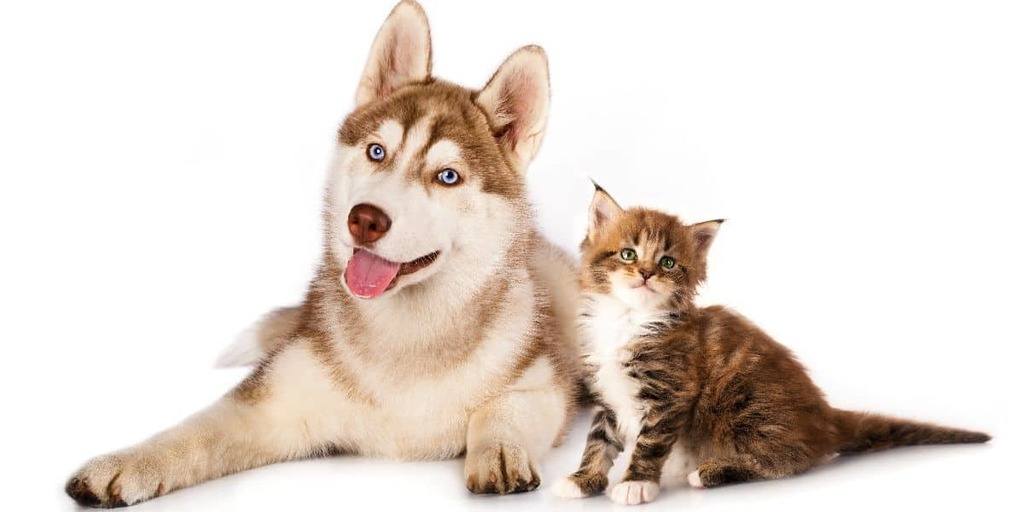
You got a new Siberian husky puppy and bring him home with his irrepressible temperament, and are worried about how a kitten or an adult cat will react to it? Or maybe you want to know how to make a kitten friend with a husky dog, that has been living in your house for a long time? Befriend animals with different psychology of behavior is not so easy as you think.
Siberian Huskies, despite being domesticated, still have a natural prey drive. They want to chase and capture smaller animals. However, with careful, disciplined training you might just be able to make your Husky get along with a cat at home. Here’s how…
1. Set realistic expectations
The training you will need to give your Husky is not going to be easy. It will require time, patience, and your watchful attention for many weeks, if not months. Despite this effort, you might not win. Some dogs can’t shake that prey drive even for family cats. You need to think about a Plan B, such as physically separating kittens from puppies full time. And although we hope it would never happen, Huskies can and do kill cats, should the two of them cross paths. It might not be a pleasant thought but you need to be mindful of the potential consequences of cohabitating a Siberian Husky with a cat.
2. General Tips
It isn’t all gloomy though. Here are some ideas of how to get off to a good start and give everyone a chance at living happily together:
 Start training early in the dog’s life. There are lots of training articles on Husky Puppies Info with general advice on what to do and how to do it. The earlier you start the easier it will be to form good habits in the dog’s mind.
- Ensure you can physically separate the cat and the dog, each having resting, feeding, and pooping areas. In the beginning, only a short amount of time will be spent together so they need a space to feel comfortable in when not training.
- Exercise your puppy first, before letting him or her spend time with your cat. Exercise can dampen the boisterous nature of puppies, who might be inclined to jump or trample over your cat.
- Keep your Husky on a leash until you are absolutely, positively, 100% positive he/she will not attack or chase your cat. You probably already know it is risky to send your dog off-leash at the park, and the same applies indoors with smaller animals.
- Give lots of positive feedback when your Husky “plays fair”. This is the key to helping your Husky understand the cat is part of your “pack” and not a foreigner.
3. Start by setting up your home
The introductions will require your Siberian Husky on the leash, and the cat free to come and go. Ensure the cat can escape to a safe place that he/she already frequents. If you have a small pet door, or a barrier (such as a child gate you jam in a hallway or stairwell) that the cat can squeeze through but not the dog, that’s great! Otherwise, just a room that can be closed off will do.
4. Introductions
It will help if you have a partner so that one of you can manage the Husky, and the other the cat. However, if you are on your own that’s ok, just try to encourage the cat to visit the Husky and have a sniff around.
Set the dog up so that he or she is in an area that the cat can approach without surprise – visibility for the cat is important. Whilst the dog is on the leash, encourage the cat to come up and say hello. It would be natural for the dog to get excited and that’s ok. The important thing is that you have control of the dog, and are willing to repeat this process many times until he exhibits calmer and restrained behavior.
The first encounter might only last a few seconds before the cat runs away. Don’t forget that cats are curious and are likely to come back for more.
5. Develop the relationship
Work your way up to 5-minute encounters, and then try for 6, 7, 8 minutes, and longer. Keep this up for a month until you can have substantial sessions together (such as 30 minutes) without any major problem. If your Husky jumps for the cat or displays other predatory behavior, issue feedback with a firm “no”. No need to punish the dog, rather issue praise and positive feedback when he shows restraint.
6. Monitor closely
At one point you will have the husky off-leash. Still, make sure you have the cat’s safe place open so they have somewhere to run to if frightened. Otherwise, keep close to your Husky and be prepared to grab the collar if he or she gets rough.
With a bit of luck, your cat and dog are starting to get along nicely! Of course, it might take many weeks or months of supervision to gain the confidence that they won’t hurt each other. It is quite ok to have the two separated every time you are out of the house, just in case something does happen.
7. Warning signs
Aggressive behavior by either animal is a sign that the relationship needs further work. Cats tend to wave their tail when anxious, take swipes with their paw, and stare intently at their foe. Huskies tend to get excited and move a lot, maybe try to pick the cat up in his/her jaw.
However, there is a fine line between play and fight. In this video the animals get along ok, despite the slightly aggressive behavior:
Conclusion
With patience and a bit of knowledge, you might just pull it off – introducing two natural foes to each other and have them get along. It’s not an easy process and given the choice, not one most Husky owners want to deal with. Just remember to take things slow and give lots of positive feedback to your Husky when he or she behaves nicely around your cat.
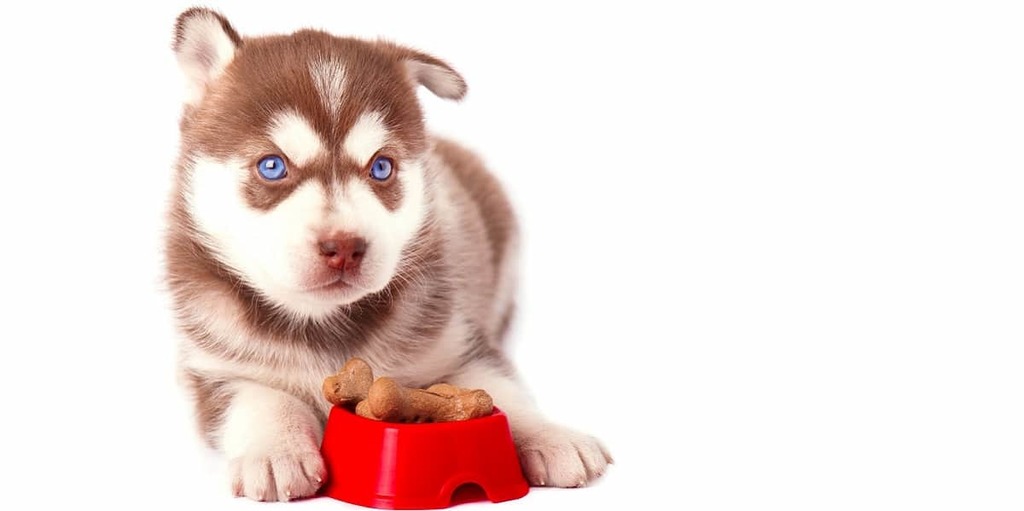
Treats for your Siberian Husky are a great way to reward good behavior during training. However not all food is good for your puppy to snack on. Here we have a look at what is suitable for puppies and what to avoid.
As you know, puppies need food to grow. It is really important to feed your Siberian Husky puppy good quality food that promotes muscle and bone growth and provides the energy needed to exercise and play. Snacks are no different. Just like human snacks you want to avoid snacks that are high in fat, sugars, and calories. They might taste good (to the puppy!) but overall might be harmful to the health of your husky in the long run.
If purchasing treats from a store look for those with high meat content. Lower quality snacks are often cheaper because they have “filler”, typically a grain of some kind. The worst have high-fat content.
Snacks should be fed as a treat and not become part of normal feeding routines. Typically the only time you would feed your dog treats is to reward good behavior during training or playtime. If you start conditioning your puppy to accept snacks all the time they will become used to that behavior, and start pestering you between meals. See our article on Feeding Siberian Husky Puppies if you need some further advice on meals.
Store-bought snacks can be a bit pricey but there is a wide range of “human” foods that your puppy might take to:
- Plain rice and oatmeal.
- Unsalted pretzels, unsalted almonds, unsalted and unbuttered popcorn.
- Cut up an apple.
- Blueberries, strawberries, and other berries without pips.
- Bananas. Frozen bananas are a great treat.
- Seedless watermelon.
- Beans, carrots, and sweet potatoes.
- Peanut butter is ok as an occasional treat in a KONG Toy
 , but be aware of the high sugar and fat content.
 It will require some experimentation to see what your Husky likes. Don’t be surprised if he likes food for one month, but goes off it the next. Huskies need some variety in flavors and textures in their food. You can also bake your own doggie treats – check out the Dog Treat Kitchen website for recipes that are easy and inexpensive.
There are some human foods NOT suitable for dogs, including chocolate, grapes, and avocado. We have some specific advice on these foods here.
When feeding treats you might want to cut or break them up into smaller pieces. Puppies only have small jaws, small tummies, and you can reduce intake by reducing the portion size. Don’t forget that during training there are many non-food rewards you can give as feedback, such as pats, rubs, scratches, positive words, and playtime with favorite toys. Try different things and see what works best for you and your dog!
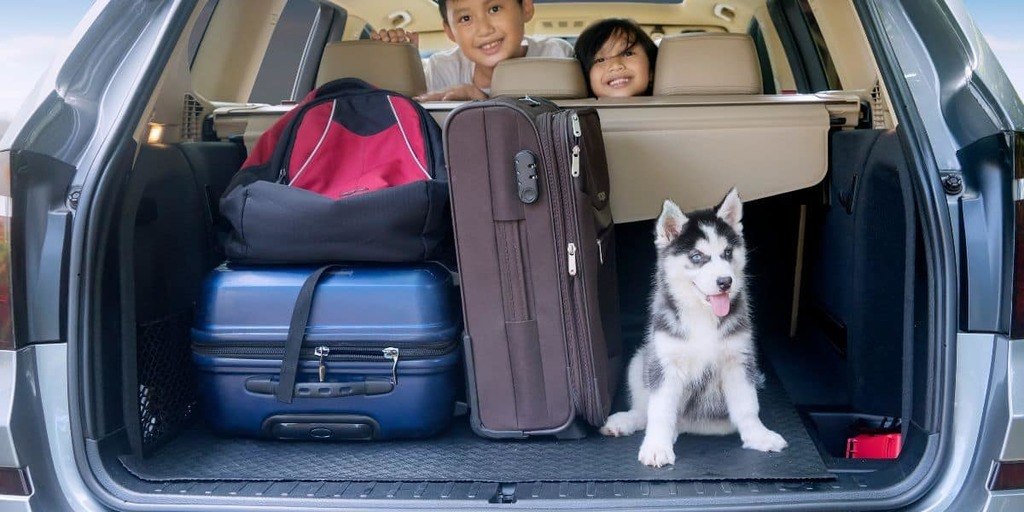
Even if you don’t plan on traveling much with your Husky, the chances are you still need to get the puppy home from the breeder, to and from the vet, and occasionally out to a larger park or beach to run around. Here are our top ten tips for safe and healthy travel with your Siberian Husky:
1. No food beforehand
Avoid feeding your Husky two hours before travel. This should give time for the food to digest and not swirl around in the tummy. If your dog does get sick (and husky puppies are especially prone to car sickness) there will be less mess to clean up if they vomit (throw up).
2. Carry cleaning gear
When your Husky has an accident (toilet or vomit) it pays to be prepared to clean it up quickly, efficiently, and without fuss. You will need a paper towel, bath towels or blankets, plastic bags, wet wipes, and some basic cleaning gear to get the job done.
3. No roaming
Secure that Husky! We all see dogs in cars jumping around, heads out the window, barking at other motorists. That’s irresponsible and dangerous. In an accident, the dog becomes a pinball that bounces around – causing all sorts of terrible injuries. So, secure your dog down. This also helps calm the dog because there is less opportunity to get hyped up.
4. Use a crate or belt
Safety belts have the advantage of securing dogs down very well – so that it is little or no movement possible in the event of an accident. If you go this way then make sure the belt is made out of very strong material because your Husky is likely to get bored during travel and start chewing.
Dog crates are a popular alternative and although offer some movement, are a lot more secure than no restraint at all. When purchasing a crate lookout for these qualities:
- Large enough so that your Husky (both now, and as it grows larger) can get up and turn around.
- Quality, sturdy, construction that will last the bumps and movements that come from travel, carrying it in and out of the car regularly.
- Construction that is chew-proof when your dog is inside.
- A stable base. You might need to further tie the crate down to stop movement on the floor so look for anchors and methods to tie these straps in to.
- Strong and doggy-proof latches. Siberian Huskies are known for being escape artists – just check out this video.
- Ease of cleaning, especially on the road where you might not have a hose available.


Some vans and SUVs have a trunk section that can be caged off from the passenger section. This is better than having the dog on the front seat but you might still want to consider securing him or her further, depending on how large the area is.
Whatever you choose to do you will probably need blankets or mats under the dog – to trap the doggie hair and also any accidents. I got this one on Amazon – BarksBar Luxury Pet Car Seat Cover and it works pretty well for our Ford-F150.
5. Stay cool
If your Husky is out the back of your car or van there might not be a lot of ventilation back there. So open up windows or turn the fans on and blow air down that way. Sitting in front of a window on a sunny day can get quite warm so you might need the A/C on as well.
6. Never leave the dog alone
You would never leave a child unattended in a car and a dog is no exception. Even if you crack the windows open this is rarely enough to stop the heat, let alone provide adequate ventilation. Hopefully, you have someone who can stay by the car and supervise. Open the trunk or tailgate to let more air through when the car is stationary.
7. Plan entries and exits
How are you going to get your Husky in and out of the car, safely, and on a leash? Unless you have two strong individuals it might not be possible to lift a dog crate in and out of each stop. Work out the process of getting your dog up into the car and into a safe position. For exit, you need to work out how you will get the leash onto your dog safely before it has a chance to jump out of the car and run.
8. Keep calm
 Just like children, a lot of noise, uncomfortable movements, and unnecessary commotion can distress dogs. If an incident happens such as an unexpected toilet stop or travel sickness there is no need to make a big fuss about it. Clean up and carry onwards.
9. Frequent stops
Also like children, Huskies can get bored in the car. It is their nature. Pullover every hour and give your dog a bit of water and a walk around. You might have to bring along a bowl and water if there is none along the way. Of course, if your Husky is sleeping then push through and enjoy the journey!
10. Have a plan B
If you are heading quite a distance away from home, have you thought about what will happen to your Husky if your car breaks down? Check your auto association or mobile mechanic to see if they cover pet retrieval. Also, consider what if your dog really doesn’t like traveling? You might want to think about the possibility of taking it slow and easy, even if that means breaking the journey up over two days.
Not all dogs like travel and car travel especially can be disruptive and dangerous. We hope these pointers help you and your Siberian Husky travel safely and in good health.
Siberian Huskies were bred as working dogs – pulling sleighs and assisting hunters. It is no surprise that they need space, but how much space? And can they survive in a smaller environment with little yard space?
The primary concern is not so much space they have, but rather how much exercise they receive. Here you can check, that Huskies can live in apartments given enough outdoor time for exercise and play. The physical and mental stimulation they crave is most important. It is not uncommon for Siberian Husky owners to exercise their adult dog for 2 hours a day, and that’s on top of playtime as well! No matter how large or small your yard is, if you can’t spend the time exercising and entertaining your dog then perhaps a Husky is not for you.
 Also important is the security of your yard. Huskies are known for escaping and given the chance will try to jump and climb fences, or dig underneath. Fences need to be high, and also buried in the ground. Latches and bolts need to be secured or the dog will find a way to open them.
If left alone a Husky might become bored. This could be a problem if the dog is indoors, and will probably resort to tearing apart furniture and pushing objects around just to keep him/herself entertained.
Because Siberian Huskies are pack animals they go really well with another canine companion. Two Huskies will play with each other some of the days and reduce the tendency to become bored and destructive. Don’t forget double the dogs could mean double the trouble, vet bills, food, and toys!
Whatever you do you can not let a Siberian Husky roam the neighborhood, even if you are out in the country. Huskies like to run and will take off after smaller animals if given the chance. When exercising and walking your Husky you are likely going to have to leave it on a leash all the time.
So if you only have a small yard fear not, a Husky can and will survive, but it is up to the responsible owner to provide the exercise and stimulation needed every day of the Husky’s life.


